
China’s Path to EV Dominance
This article was written by our member Karel van Oorschot from KVO Engineering. In this article, you can find an overview of the recent trends in the Chinese EV sector and what it could mean for the future of traditional European car manufacturers. Karel also uses his expertise to shed a light on some future strategies for Chinese and European car manufacturers.
How did China become the dominant player in electric vehicles? For most Western consumers this appears to be a sudden wave of new Chinese brands entering the European market. In reality, it is the result of more than a decade of policy-making, investment, and development.
Long-term vision and government incentives
In 2015 China released its industrial masterplan, Made in China 2025, identifying several priority sectors for national development. Electric vehicles were among the top priorities. At that time most Chinese consumers still preferred foreign cars, and local OEMs struggled to compete in the combustion-engine vehicle market.
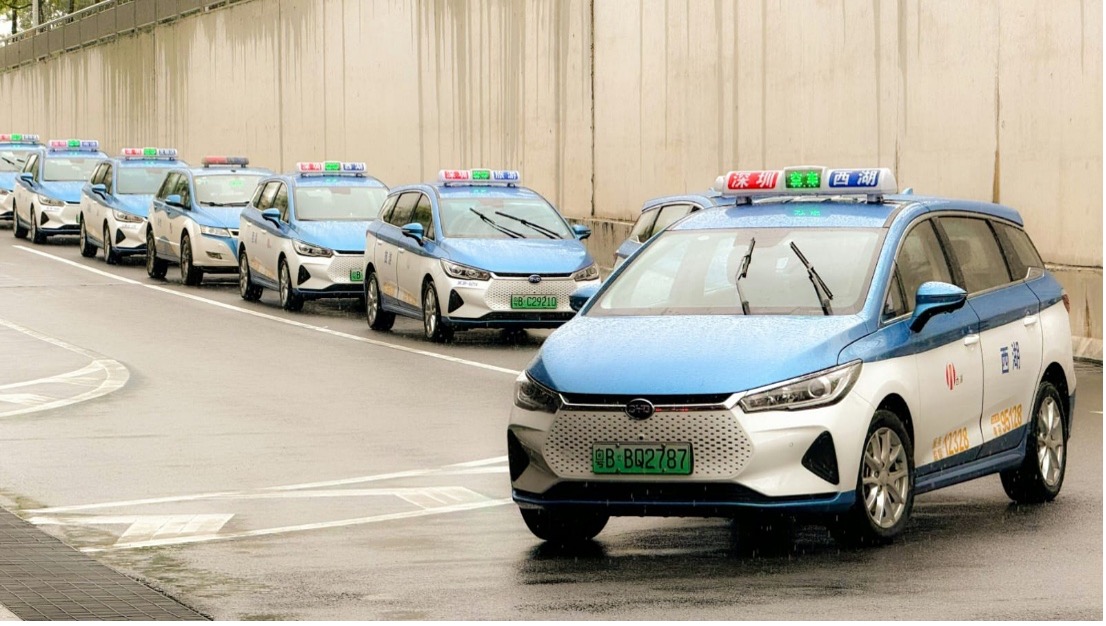
This triggered large-scale funding for EV R&D, as well as policies requiring taxis and public transport fleets to adopt new-energy vehicles in order to qualify for subsidies. This immediately created a market, a testing ground, and a strong incentive for OEMs and suppliers to start developing EV technologies at scale.
Local EV ecosystems and vertically integrated supply chains
These policies created dense regional ecosystems around emerging OEMs—Shenzhen with BYD being one of the most prominent examples. Because EV
technologies were new, suppliers had to remain extremely close to the OEMs. With no legacy combustion-engine supply chains holding them back, Chinese OEMs could experiment rapidly and collaborate tightly with technical partners. The “customer first” mentality also helped align suppliers closely with OEM roadmaps. Taxi fleets became real-world proving grounds, enabling fast iteration. Today BYD still benefits from being both a vehicle OEM and a battery manufacturer. BYD and CATL together hold around 50% of global battery production capacity, and remain deeply integrated with Chinese OEMs, both in manufacturing and in R&D. This reduces development time and improves system-level integration inside the vehicle.
A wave of EV start-ups
Thanks to government support, venture capital, and rapidly growing demand, more than 500 EV start-ups existed by 2018. These included vehicle manufacturers, hardware suppliers, and software developers. Most disappeared or were absorbed by larger players, but their failure wasn’t wasted: they trained thousands of engineers, and the intense competition ensured that only the fastest, strongest companies survived.Unlike traditional automakers, these new players operated more like software-driven tech companies, prioritizing rapid iteration, cost optimisation, and user experience. Traditional OEMs had never faced competitors with this mindset.
Chinese consumers are shaping the market
Chinese consumers generally embrace new technology and fast product cycles, and this is no different in automotive. Western consumers are more conservative; the Chinese expect each new model to bring meaningful upgrades. As a result, model lifetimes have shortened dramatically, a four-year-old model is considered outdated, and consumers don’t accept that. For Chinese buyers, EVs are not just a change of engine but a completely new product category: connected, digital, software-defined. Where some European and Japanese OEMs try to make EVs feel
like combustion cars (e.g., simulated shifting), Chinese OEMs have no heritage pulling them back. They focus directly on what customers want apps, connectivity, integrated services, and a seamless experience across vehicle and phone. This shift will increasingly be exported globally, and some European consumers may prefer these innovations over traditional brands.
Future for traditional OEMs
The Chinese EV wave is both a challenge and an opportunity for traditional OEMs. It should now be clear that EVs are the way forward toward net zero. Hydrogen and e-fuels will not scale for passenger cars and mostly function as distractions or niche technologies. In the past, when China lagged in automotive technology, Chinese companies entered joint ventures with Western OEMs. Today the situation has reversed. Cooperation between Europe and China could benefit both sides: Europeans gain access to state-of-the-art batteries, software platforms, and cost-effective manufacturing. Chinese companies gain market access, high-end branding, and global service networks These partnerships can take many forms: technology licensing, shared supplier networks, software procurement, or even vehicle re-branding.
About KVO Engineering
KVO Engineering is a Belgian Shanghai-based sourcing and engineering support company helping European companies access China’s fast-moving EV and manufacturing ecosystem. With a technical approach, KVO bridges the gap between European engineering expectations and the speed and cost advantages of Chinese suppliers.
The company focuses on prototyping, sourcing and hands-on project engineering, especially in e-mobility components such as motors, controllers, and mechanical systems. By working directly with R&D teams and local partners, KVO ensures that European companies can adopt new technologies quickly and reliably, without the risks of navigating China alone. For further discussion or question, please contact
karel.vanoorschot@kvo-engineering.com or find them on LinkedIn.