New Member Spotlight: FOX Global Logistics
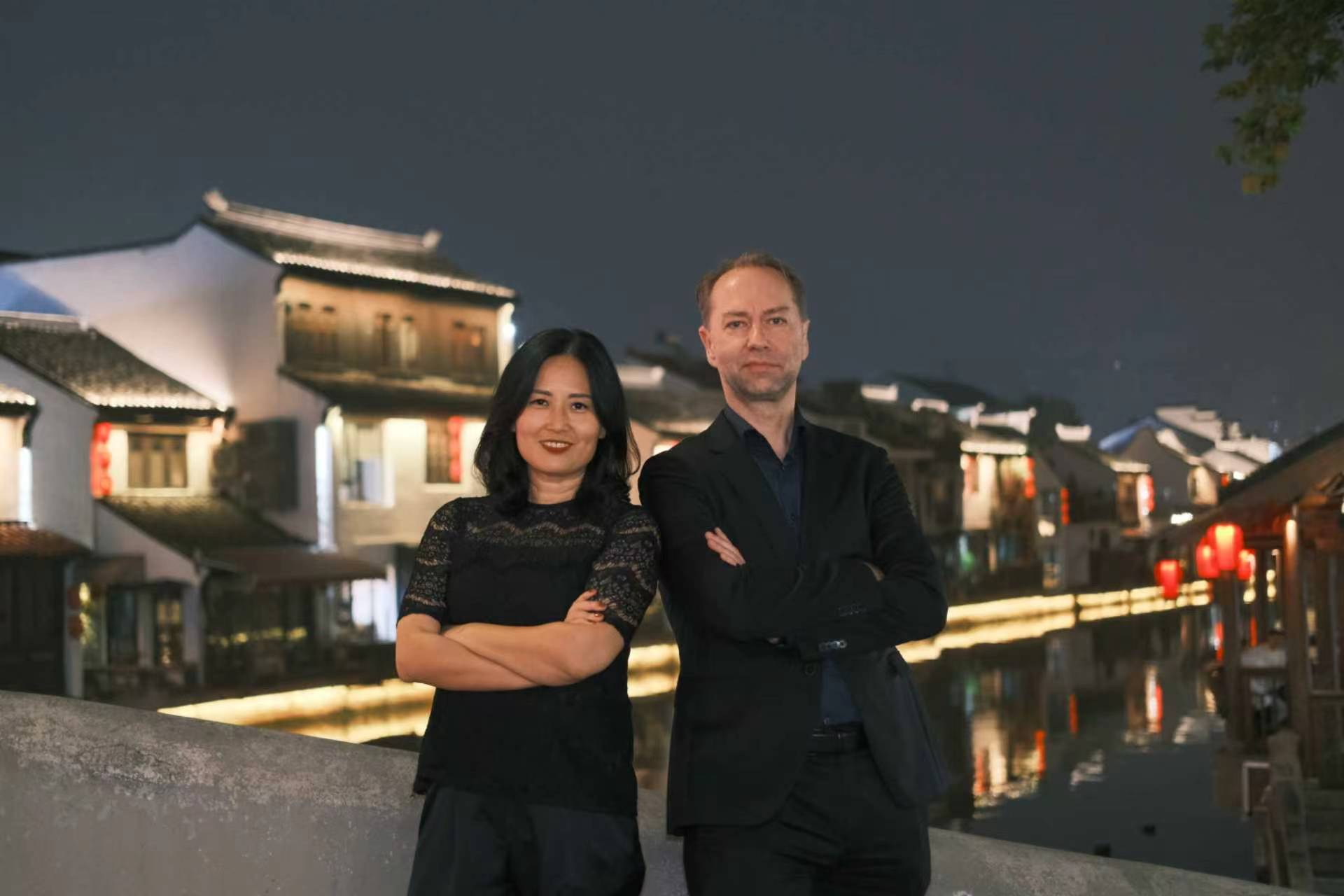
We are pleased to introduce FOX Global Logistics as one of the newest members of the Benelux Chamber of Commerce. Founded by Norman de Vos and Amenda Zhao, FOX Global Logistics has grown into a comprehensive logistics provider, offering tailored freight, warehousing, and supply chain solutions across Europe. We sat down with Norman de Vos, Founder and CEO of FOX Global Logistics, to learn more about the company, its journey, and the logistics market it operates in.
1. For readers who may not yet know FOX Global Logistics, could you briefly introduce the company and explain where you are strongest in the global logistics market?
FOX Global Logistics was founded in 2005 and is headquartered in Berkel en Rodenrijs, near Rotterdam Airport, with additional offices in Shanghai, Shenzhen, and Dhaka. We operate three bonded warehouses totalling 132,000 square metres, including three state-of-the-art facilities with offices, all connecting Rotterdam Airport, Rotterdam Harbor, and the surrounding highway network.
We're a full-service logistics provider, covering warehousing and fulfilment, freight forwarding by sea, air, rail and road, customs clearance and fiscal support through our in-house customs department, and distribution, where our teams work around the clock to get goods to their destination on time. Today we employ around 150 people, including 25 Chinese native speakers, and hold AEO customs certification along with memberships in FENEX-TLN, IATA, and Teamtrans.
If you ask where we're strongest, it's as a China to Rotterdam specialist with a genuine niche in renewable energy and hazardous goods warehousing, particularly lithium-ion batteries, backed by our strong Chinese network and daily Benelux distribution capability.
2. The logistics industry is highly competitive. What do you believe genuinely differentiates FOX Global Logistics from other international freight forwarders?
Two things stand out. The first is our China trade infrastructure. We have 25 Chinese native speakers on our team, backed by our own offices in Shanghai and Shenzhen rather than third-party agents, and a strong Chinese network with key contacts at various Chinese, including state-owned, companies. That combination of language, presence, and relationships on the ground is very difficult for a competitor to replicate quickly.
The second is our long-term experience handling lithium-ion batteries. We cover the full chain for this cargo ourselves: port operations, customs and dangerous goods documentation, EU road transport and distribution, warehousing, and order picking and quality inspection. Very few forwarders manage every one of those steps in-house, which is what makes this a defensible specialism for us rather than just a service we list.
3. Rotterdam has long been one of the world's most important logistics hubs. How does having your global headquarters there create advantages for your customers and your global network?
Our headquarters and warehouses sit in Berkel en Rodenrijs, strategically positioned to connect Rotterdam Airport, Rotterdam Harbor, and the surrounding highway network directly. That's genuinely useful for our customers, and we're upfront that this location advantage is shared with other companies also based in the Rotterdam and Rijnmond area. What sets us apart is what we've built on top of that location: three of our own bonded warehouses, our own China offices, and a fleet of 50 container trucks running throughout Europe for daily Benelux distribution.
4. China remains a critical market for international trade. How is FOX Global Logistics positioned in China, and what role do your China operations play within your global network?
Our China offices act as the origin-side control point for freight heading into Europe. We operate as a licensed N.V.O.C.C. with weekly consolidation services from China, and we handle project FCL shipments and full door-to-door services. On the European side, our bonded warehouses near Rotterdam, including facilities equipped for lithium-ion batteries and other dangerous goods, mean a shipment can be booked, consolidated, and documented on the Chinese side, then received, stored, and distributed across Europe largely within our own infrastructure, rather than being handed off between unrelated companies at each leg.
5. Supply chains have become increasingly complex in recent years. Could you share an example where your team helped a customer overcome a particularly difficult logistics challenge?
One example that stands out is lithium-ion battery storage. As demand for batteries, inverters, and other renewable energy products has grown, many of our customers have struggled to find warehousing that can actually handle this cargo safely and legally. Lithium-ion batteries are classified as dangerous goods, and storing them requires specific permits, safety measures, and ongoing coordination with the relevant authorities, something most general-purpose warehouses simply aren't set up for.
We stepped in to solve exactly that problem. Because we've built long-term experience and the right dangerous goods documentation in-house, we were able to offer customers compliant, secure storage for their battery shipments rather than leaving them to find a patchwork solution across multiple providers. Part of that work involves staying in direct contact with the authorities, making sure our licensing, safety procedures, and documentation are always aligned with current regulations, so our customers don't have to manage that relationship themselves.
For customers, this took a genuine bottleneck out of their supply chain. Instead of struggling to find capacity or worrying about compliance gaps, they had one partner handling storage, documentation, and regulatory contact together, which is precisely the kind of complexity we built this specialism to absorb.
6. Many companies are navigating shifting trade policies, geopolitical uncertainty, and increasing digitalization. What do you see as the biggest trends shaping global logistics over the next five years, and how is FOX Global Logistics preparing for them?
We see two trends that play directly to our strengths. The first is trade policy and tariff volatility, where our own China offices and our own bonded warehousing in the EU give us real flexibility to reroute, re-document, or hold goods in bond without depending on outside partners. The second is the growing demand for regulated hazardous goods storage, particularly batteries and renewable energy components, where our long-term experience in lithium-ion battery handling already gives us a strong foothold.
We're also actively building toward where e-commerce and parcel logistics are heading, including direct customs interfaces for B2C parcels, pre-clearance before landing, WMS integration across sales channels, automated order pick and pack, and last-mile solutions across product types. Alongside that, digital visibility and AI-driven tooling are becoming a baseline expectation across the industry, and that's the area we're deliberately investing in over the next five years, rather than assuming our current systems are enough.